SCAMS AND TRAVEL
Flying With a Service Dog: Current U.S. Rules
Commercial airline rules are not the same as the ADA rules used in restaurants and stores. Flights to, from, or within the United States are primarily governed by the Air Carrier Access Act and Department of Transportation regulations.
Under current DOT rules, a service animal is a dog, regardless of breed or type, that is individually trained to do work or perform tasks for a qualified person with a disability.
Which animals airlines must recognize
Airlines must recognize qualifying task-trained service dogs, including psychiatric service dogs.
Airlines are not required to recognize these as service animals:
- Emotional support animals
- Comfort animals
- Companionship animals
- Species other than dogs
- Service dogs in training
An airline may transport those animals under its ordinary pet policy.
Forms an airline may require
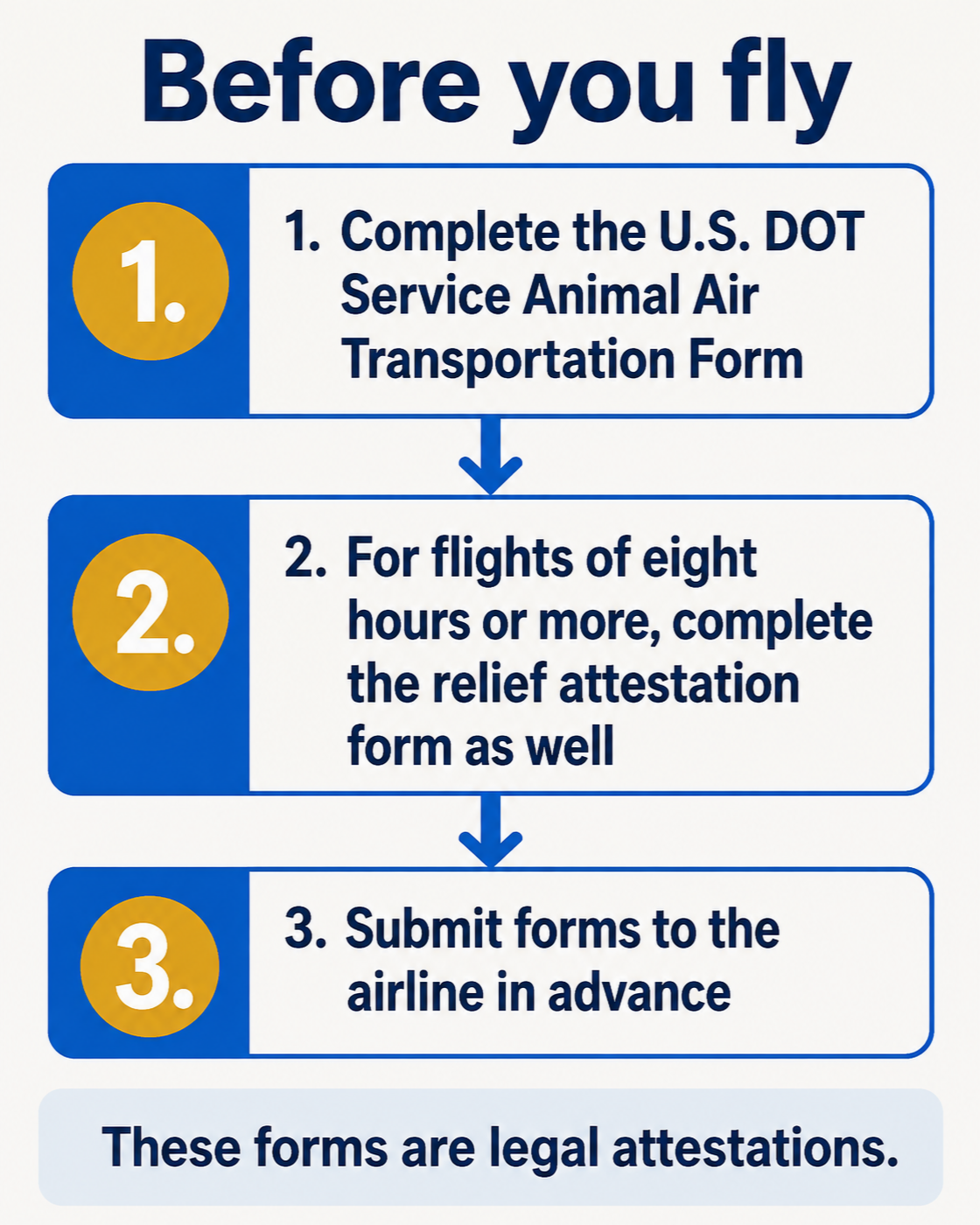
An airline may require the U.S. DOT Service Animal Air Transportation Form. The handler attests to the dog's health, behavior, and training.
For a scheduled flight lasting eight hours or more, the airline may also require the U.S. DOT Service Animal Relief Attestation Form. The handler states that the dog will not need to relieve itself during the flight or can do so in a sanitary manner.
The forms are legal attestations. Knowingly making a false statement can carry consequences.
Timing and submission
If a reservation was made more than 48 hours before departure, an airline may require submission of the DOT form up to 48 hours in advance. For a later reservation, the airline must generally allow submission at the gate.
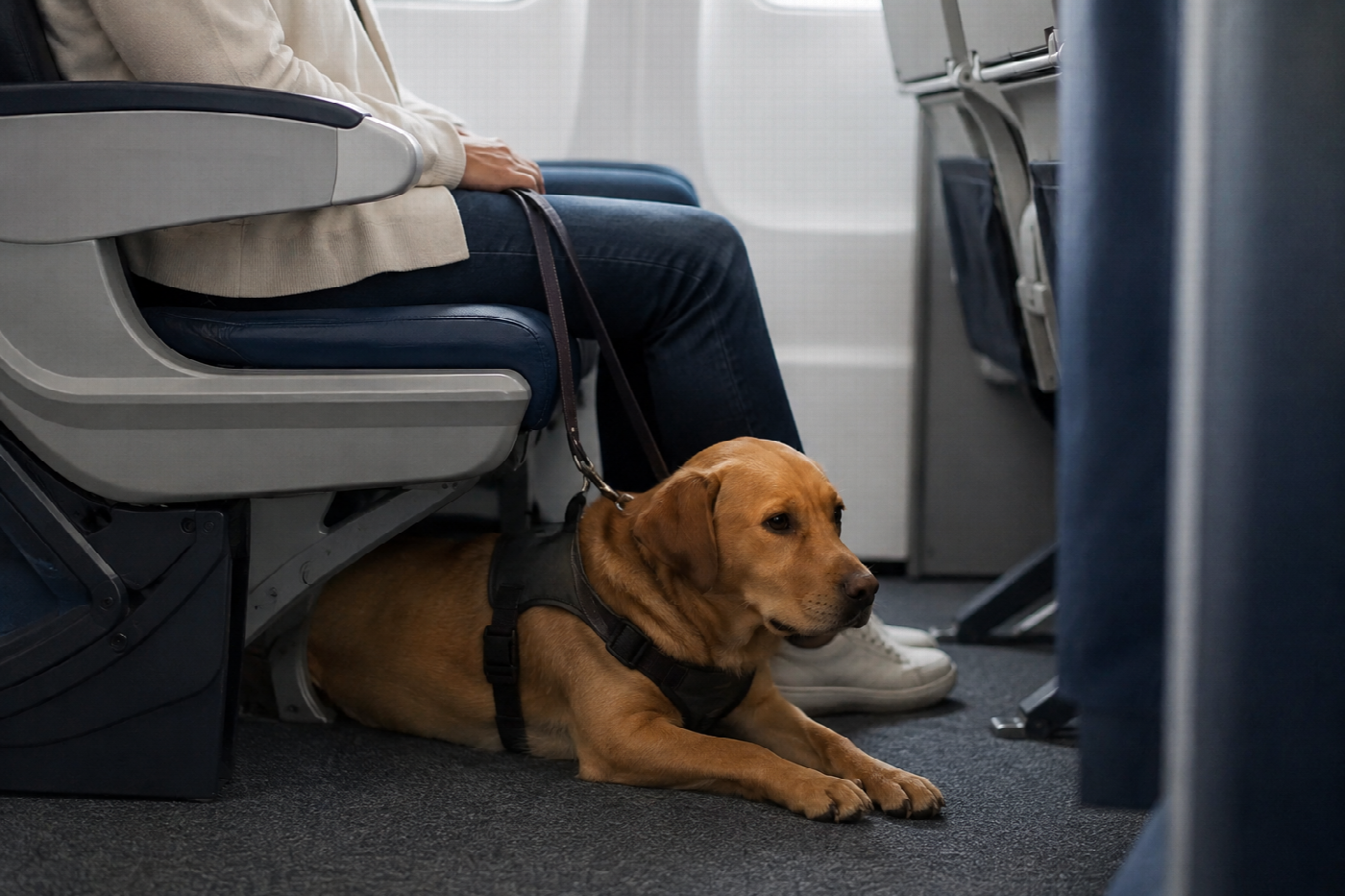
Check the airline's accessibility page well before travel. Save confirmation that forms were submitted and bring a copy.
At the airport
The airline may determine whether the dog qualifies by asking whether it is required because of a disability and what work it is trained to perform. Personnel may also observe the dog's behavior.
Prepare the dog for:
- Security screening
- Crowded gate areas
- Rolling luggage
- Public address announcements
- Elevators, escalators, or moving walkways
- Service animal relief areas
- Long periods of settling quietly
TSA screening and airline acceptance are separate processes.
Seating and space
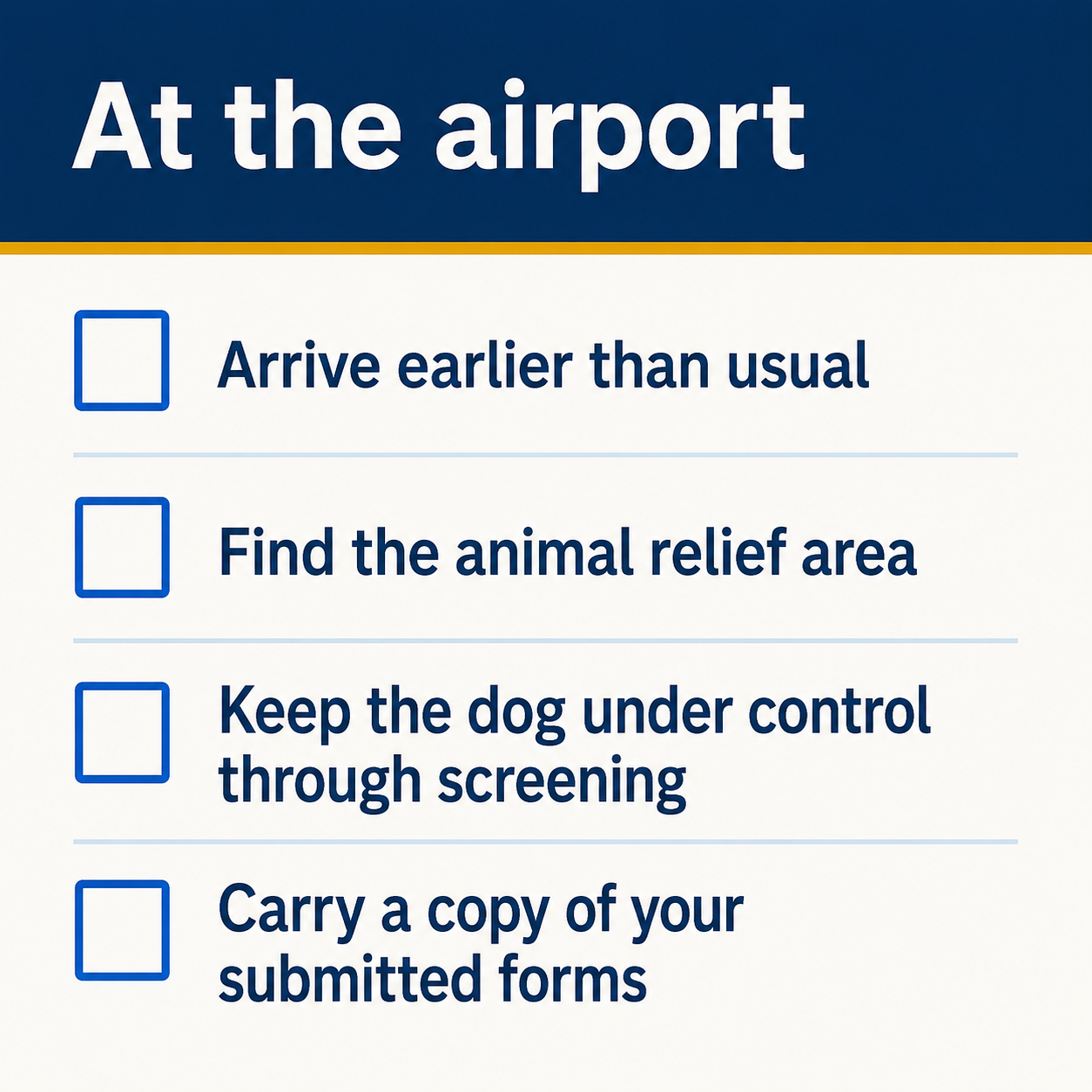
A service dog may generally occupy the handler's foot space or fit under the seat in front. A small dog may sometimes sit on the handler's lap when safe.
The dog may not block an aisle or emergency exit. The airline is not required to provide a free upgrade or an extra seat. If the dog is too large to fit safely in the purchased space, the airline may offer another seat on the same flight, rebook the team, or discuss another lawful option.
Contact the airline early to identify workable seating.
When an airline may deny transport
An airline may deny a service dog when:
- The dog poses a direct threat to health or safety.
- The dog causes a significant disruption.
- The dog is too large or heavy to be accommodated safely in the cabin.
- Transport would violate a U.S., territorial, or foreign health requirement.
- Required DOT forms are not provided.
The decision should be based on an individualized and objective assessment, not breed stereotypes or passenger discomfort.
Disruptive behavior can include uncontrolled barking, snarling, jumping on passengers, running through the cabin, or relieving itself in an unsanitary manner.
International flights
Destination countries may impose vaccination, microchip, quarantine, parasite treatment, import permit, or advance approval requirements. A country may define service animals differently.
Start planning months ahead. Confirm rules with the destination government, connecting countries, airline, and return-entry authorities. Airline approval does not replace animal import requirements.
Emotional support animals
The 2020 DOT final rule ended the federal requirement that airlines treat ESAs as service animals. An ESA letter does not restore that status.
The airline may accept the animal as a pet, subject to species, carrier, size, route, and fee rules.
Prepare a travel file
Include:
- Completed DOT forms
- Rabies and vaccination records
- Veterinary contact information
- Airline confirmation
- Destination import documents
- Medication and feeding plan
- Relief supplies
- Emergency contact information
- A recent photograph of the dog
If a problem occurs
Ask to speak with the airline's Complaint Resolution Official. Airlines must make a CRO available during operating hours. Record names, times, flight details, and the reason given for denial.
A complaint may be filed with the airline and the Department of Transportation's Office of Aviation Consumer Protection.
Sources
- U.S. Department of Transportation: Service Animals
- DOT Service Animal Air Transportation Form
- Airline Passengers With Disabilities Bill of Rights
- About the Air Carrier Access Act
Airline and destination requirements can change. Confirm them directly before every trip.