
SCAMS AND TRAVEL
Service Dog Registration Scams and Red Flags
Many websites sell service dog certificates, ID cards, database listings, vests, and doctor letters that look official. The central fact is simple: the federal government does not operate a mandatory service dog registry, and purchasing a document does not create rights under the Americans with Disabilities Act.
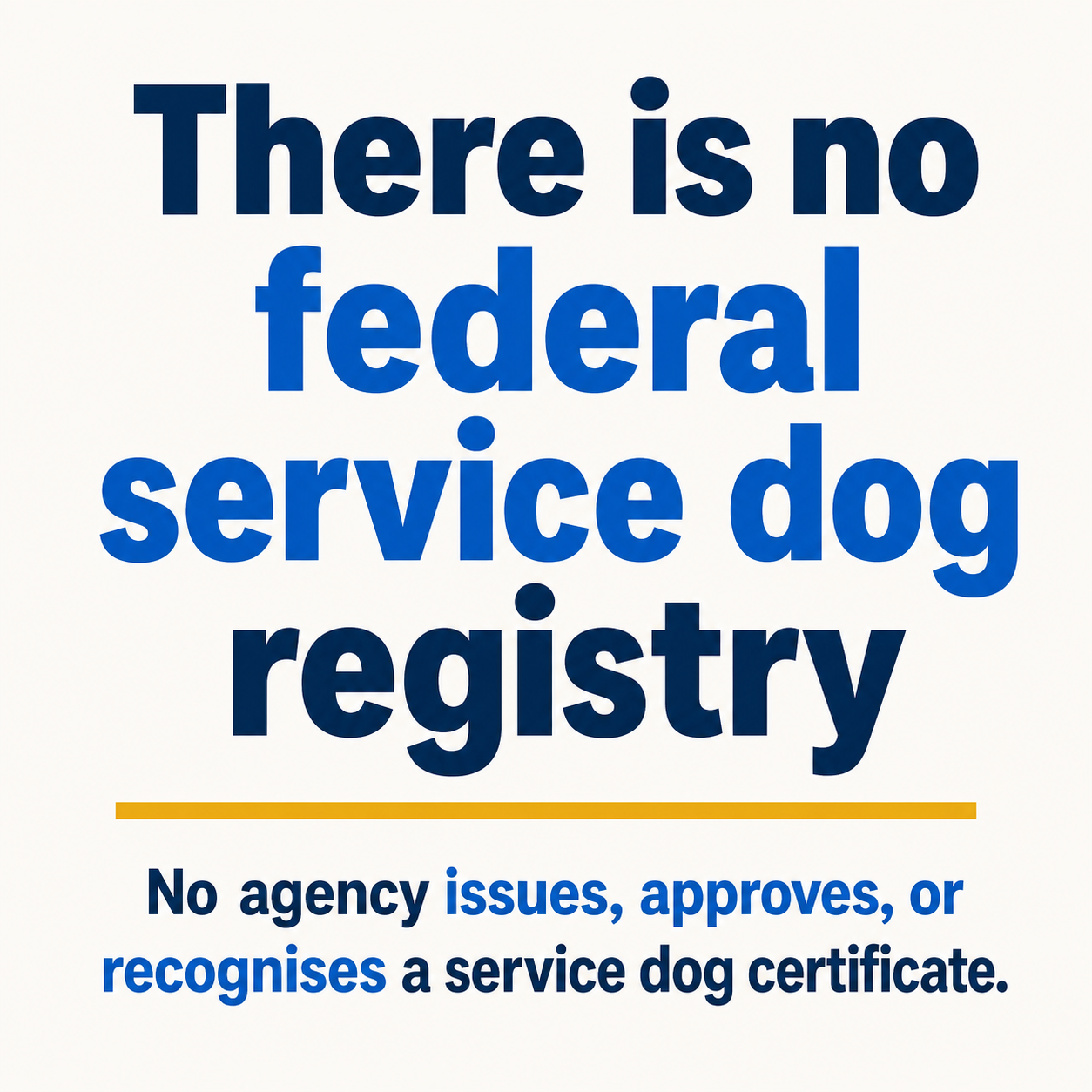
Legal service dog status comes from the handler's disability and the dog's individualized disability-related task training.
What the Department of Justice says
The Department of Justice states that covered businesses may not require certification, licensing, or registration as a condition of entry. It also states that online documents do not convey ADA rights and are not recognized as proof that a dog is a service animal.
Ordinary dog licensing and vaccination rules still apply. A community may offer a voluntary service animal registry for emergency planning or a license discount, but it cannot make that voluntary program a condition of public access.
Common misleading products
Be cautious when a site offers:
- Instant service dog certification
- A registration number said to be required by law
- A lifetime federal service dog license
- Guaranteed public access
- A vest and ID bundle that supposedly establishes legal status
- A clinician letter that allegedly converts a pet into a service dog
- Same-day California ESA documentation
- Guaranteed landlord or airline approval
These claims confuse documentation with qualification.
A vest is equipment, not legal proof
Many legitimate handlers use a vest because it communicates that the dog is working. Others use specialized harnesses for guide or mobility work. The ADA does not require either.
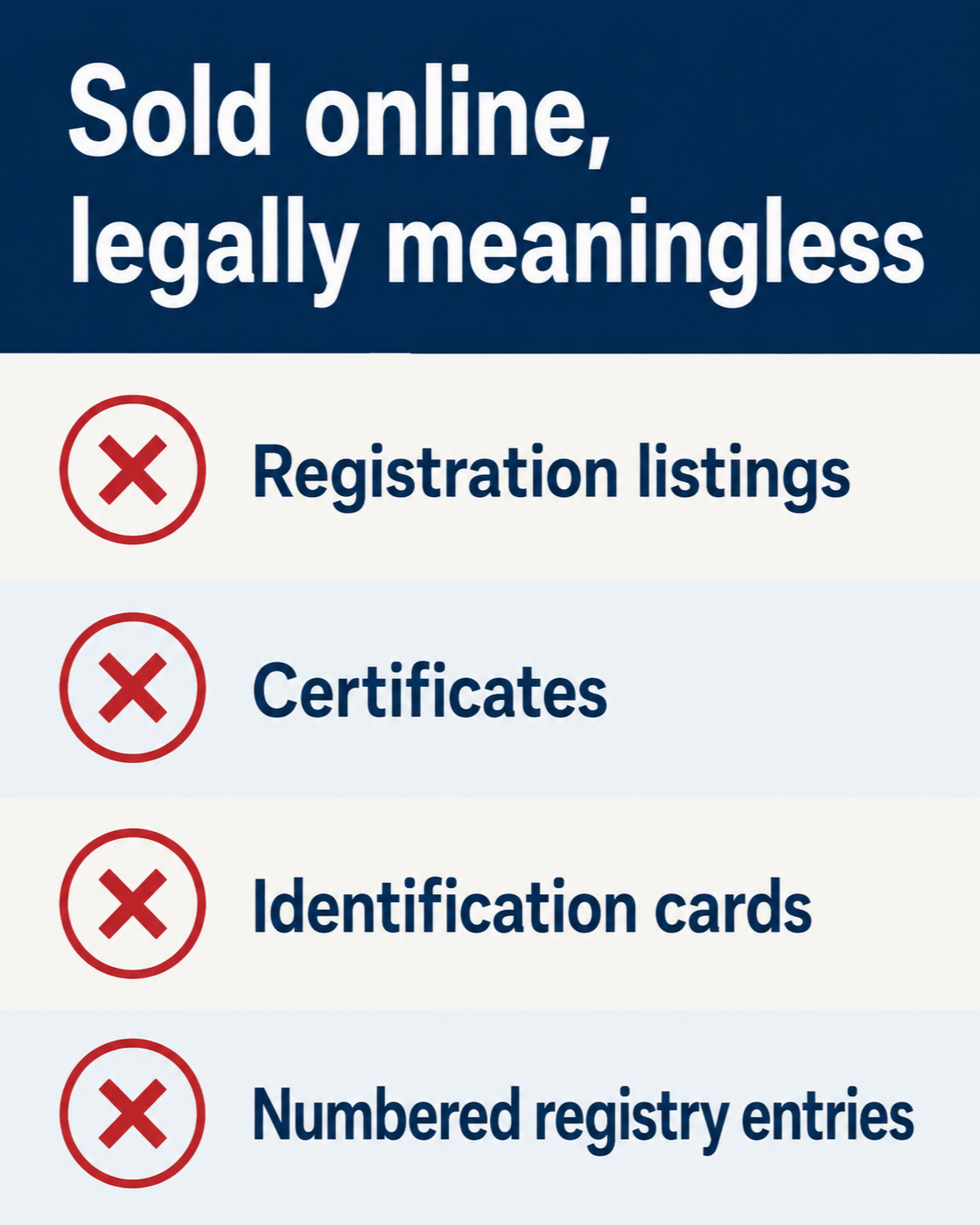
Anyone can purchase a vest. It does not prove task training, disability, behavior, or legal access.
The problem with instant letters
A legitimate health professional may provide disability-related documentation for a housing or workplace accommodation after an appropriate clinical evaluation. The professional must be authorized to practice where the client is located and must follow professional standards.
Warning signs include:
- No meaningful clinical evaluation
- Approval based only on payment
- A guaranteed letter before the assessment
- No license number or jurisdiction
- A provider who cannot legally serve the client's state
- A diagnosis generated automatically
- Claims that the letter provides restaurant or airline access
California requires at least a 30-day client-provider relationship before a practitioner issues documentation concerning an emotional support dog. Instant California letters are especially suspect.
Trainer and program scams
Not every scam revolves around paperwork. Some programs collect large payments for dogs that are untrained, unhealthy, fearful, aggressive, or mismatched.
Red flags include:

- Guaranteed success for every dog
- A fully trained service dog promised in an implausibly short time
- No written task list
- No public-access preparation
- No washout policy
- Refusal to show training
- No veterinary records
- No client references
- Pressure to pay by wire transfer, gift card, or cryptocurrency
- A contract that gives the seller broad discretion but no client remedy
- Claims that accreditation is pending when the accreditor cannot verify it
Verify Assistance Dogs International and International Guide Dog Federation status directly on their official member directories.
How to investigate a provider
- Search the legal business name and owners.
- Confirm the physical address.
- Verify professional licenses with the issuing board.
- Confirm accreditation on the accreditor's website.
- Request a detailed contract before paying.
- Ask for an itemized price and refund policy.
- Speak with past clients who had similar needs.
- Observe training when possible.
- Ask a veterinarian to review health records.
- Save advertisements and written promises.
An attractive social media account is not a substitute for evidence.
Misrepresentation harms legitimate teams
Passing a pet off as a service dog can create safety risks, increase access disputes, and distract or injure trained working dogs. Many states penalize fraudulent representation.
Businesses should still follow the ADA. Suspicion does not permit staff to demand prohibited documentation from a legitimate handler. Staff can ask the two allowed questions and address the actual behavior of the dog.
What a trustworthy service dog site should say
A responsible site should state:
- Registration is not required for ADA access.
- A certificate does not make a dog a service dog.
- Training and disability-related function determine qualification.
- ESA documentation does not create public-access rights.
- Results are not guaranteed.
- Medical and legal information is educational, not individualized advice.
Sources
- U.S. Department of Justice: Service Animal FAQs
- Assistance Dogs International: Member Search
- International Guide Dog Federation: Find a Provider
- California Board of Psychology: AB 468 Requirements
If fraud is suspected, preserve records and consider contacting the relevant licensing board, consumer protection agency, state attorney general, or qualified attorney.