CHOOSING A PROGRAM
Is a Service Dog Right for You?
A service dog can increase independence, improve safety, and make difficult activities possible. It also creates daily responsibilities, financial costs, public attention, and a long training relationship.
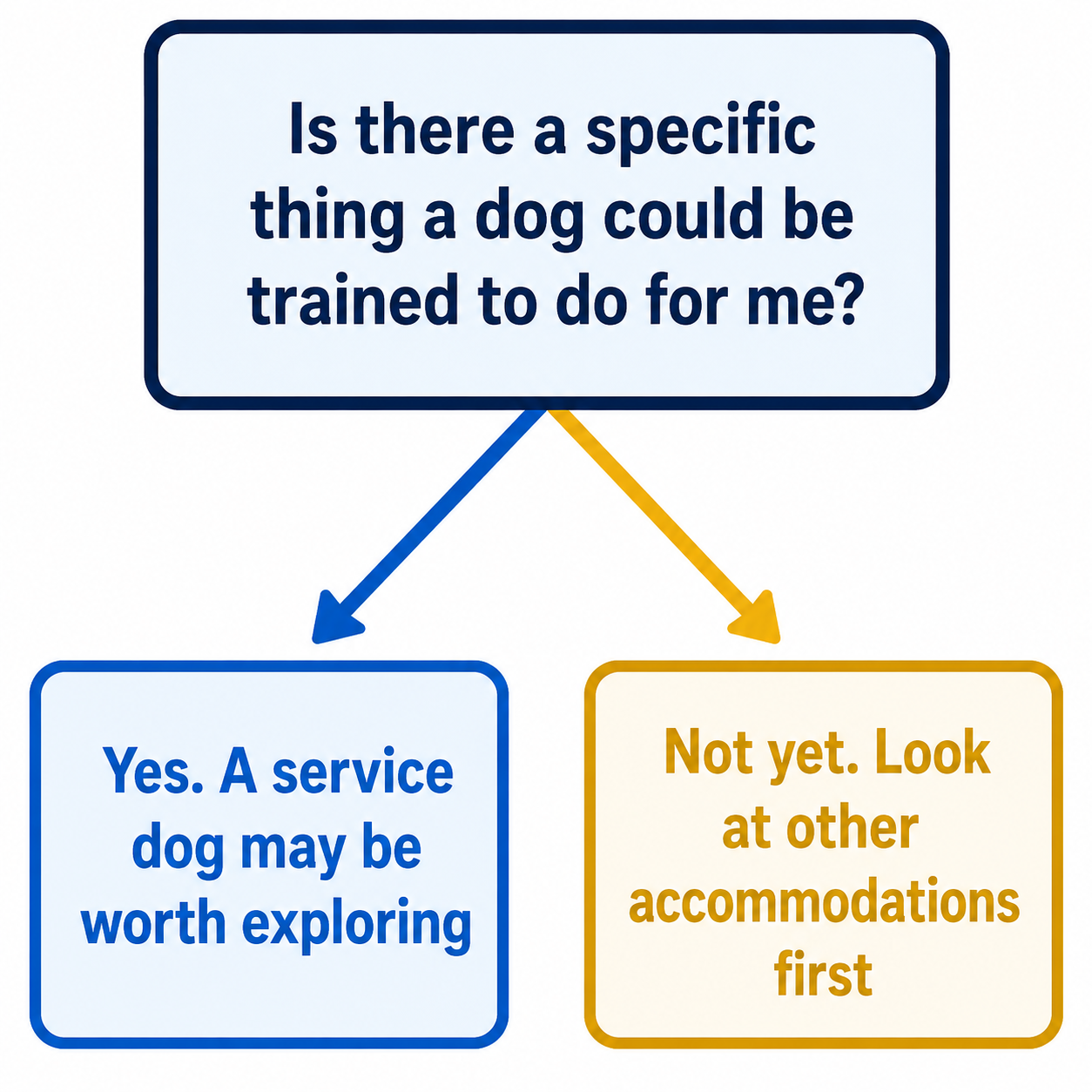
The right question is not simply whether a dog could help. It is whether trained canine assistance is a good match for your functional needs, life, environment, and ability to care for the dog.
Start with the task
Write down the specific activities your disability makes difficult. Then identify what you want a dog to do.
Good task goals are observable:
- Retrieve my phone when I fall.
- Wake me when I show a specific nightmare behavior.
- Alert my caregiver during a seizure.
- Guide me around obstacles.
- Interrupt self-harm with a trained nose touch.
Be cautious with vague goals such as make me feel safe or help my anxiety. Those benefits may describe emotional support rather than a trainable service task.
Compare other accommodations
A dog is one tool. Depending on the need, alternatives may include:
- Continuous glucose monitoring
- Medical alert devices
- Mobility equipment
- Screen readers or navigation technology
- Medication organizers
- Personal emergency response systems
- Workplace modifications
- Human support
- Evidence-based treatment
Choosing another tool does not mean the disability is less serious. Sometimes technology is faster, more precise, less expensive, or easier to maintain. Sometimes a dog offers a combination of tasks that other tools cannot.
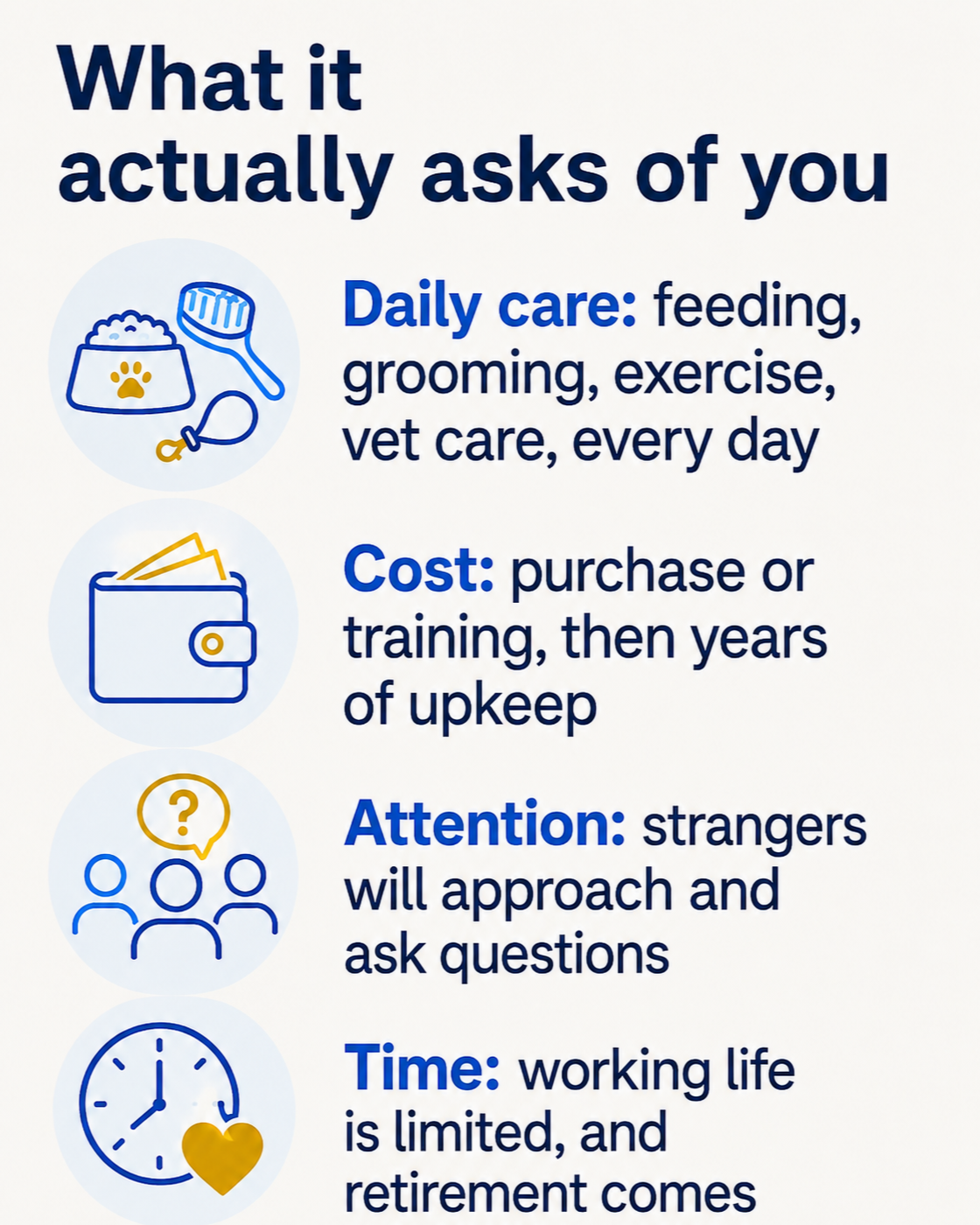
Consider daily care
The handler is responsible for:
- Feeding and fresh water
- Toileting
- Exercise
- Grooming
- Veterinary care
- Medication and parasite prevention
- Training practice
- Behavioral supervision
- Safe transportation
- Rest and enrichment
Disability can make some tasks difficult. A reliable support plan may be needed, especially during hospitalization or symptom flares.
Understand the cost
Costs can include:
- Application and assessment
- Program or private training
- Travel for team training
- Food
- Veterinary care
- Grooming
- Equipment
- Insurance
- Boarding or backup care
- Continuing training
- Emergency treatment
Nonprofit programs may subsidize placement, but often have waitlists, service areas, and eligibility rules. Owner training may reduce some program fees but requires time, skill, coaching, and acceptance that the dog may wash out.
Expect public attention
A service dog can make an invisible disability more visible. Strangers may stare, ask personal questions, pet without permission, challenge access, or share emotional stories.
Consider whether you can:
- Set boundaries repeatedly
- Answer the two ADA questions
- Advocate during an access dispute
- Leave when the dog is overwhelmed
- Manage unwanted attention while completing daily tasks
Some people feel more independent with a dog. Others find the attention exhausting.
Think about the places you go
Assess your real environment:
- Is there room for the dog at work or school?
- Can the dog settle during long appointments?
- Are there other animals in the home?
- Does anyone have severe allergies?
- Is safe toileting available?
- Do you travel frequently?
- Can the dog handle the climate?
- What happens during a hospital stay?
Public-access rights do not eliminate practical planning.
Consider family and caregiver roles
Everyone in the home should understand:
- Who gives cues
- Who feeds and exercises the dog
- Whether others may play with the dog
- How task behavior will be reinforced
- Who provides emergency care
- How children and pets will interact safely
Inconsistent rules can weaken training. A family member should not repeatedly cue the dog away from the handler or reward behaviors that interfere with work.
Be prepared for a washout
Even well-selected dogs may develop medical, behavioral, or temperament issues that make service work inappropriate.
Ask yourself:
- Could I keep the dog as a pet?
- Would I be able to rehome the dog responsibly?
- Could I afford to start again?
- How would I function while waiting for another dog?
A backup accommodation plan is essential.
Plan for retirement
Working careers are finite. A dog may retire because of age, illness, stress, or changes in the handler's needs.
Retirement planning includes:
- Where the retired dog will live
- Veterinary and end-of-life costs
- Whether the household can support two dogs
- When successor training should begin
- How the handler will function during transition
Questions for your health care team
- Which functional limitations should the dog address?
- Are there medical reasons a dog task would be unsafe?
- What treatment and monitoring must continue?
- Would another accommodation be more reliable?
- Can you help document a workplace or housing need when appropriate?
A clinician does not certify a service dog, but can help clarify functional needs.
Questions for a trainer
- Is the task realistic?
- Is my current dog suitable?
- What public behavior is required?
- What is the expected timeline?
- How will success be measured?
- What is the total cost?
- What happens if the dog washes out?
- What follow-up support is included?
Signs that the timing may not be right
It may be wise to pause when:
- Housing is unstable.
- Daily dog care cannot be reliably provided.
- The desired task is unsafe or cannot be clearly defined.
- The expectation is that the dog will cure the disability.
- The household is not ready for another animal.
- The cost would jeopardize basic needs.
- A provider is pressuring you to decide quickly.
Pausing is not giving up. It protects both the person and the dog.
The bottom line
A successful service dog partnership is built around specific tasks, realistic expectations, humane training, responsible care, and backup plans. The best decision is the one that improves function without asking the dog or handler to carry an unsustainable burden.
Sources
- U.S. Department of Justice: ADA Service Animal Requirements
- Assistance Dogs International: Looking for an Assistance Dog
- IAADP Minimum Training Standards
A service dog decision should be individualized. No directory, trainer, or clinician can guarantee that a particular dog or program will be appropriate.