TASKS AND CONDITIONS
How Diabetic Alert Dogs Help With Low and High Blood Glucose
A diabetic alert dog is trained to respond to changes associated with blood glucose moving outside a person's target range. For some people, especially those with impaired awareness of hypoglycemia, a trained dog may provide another layer of support.
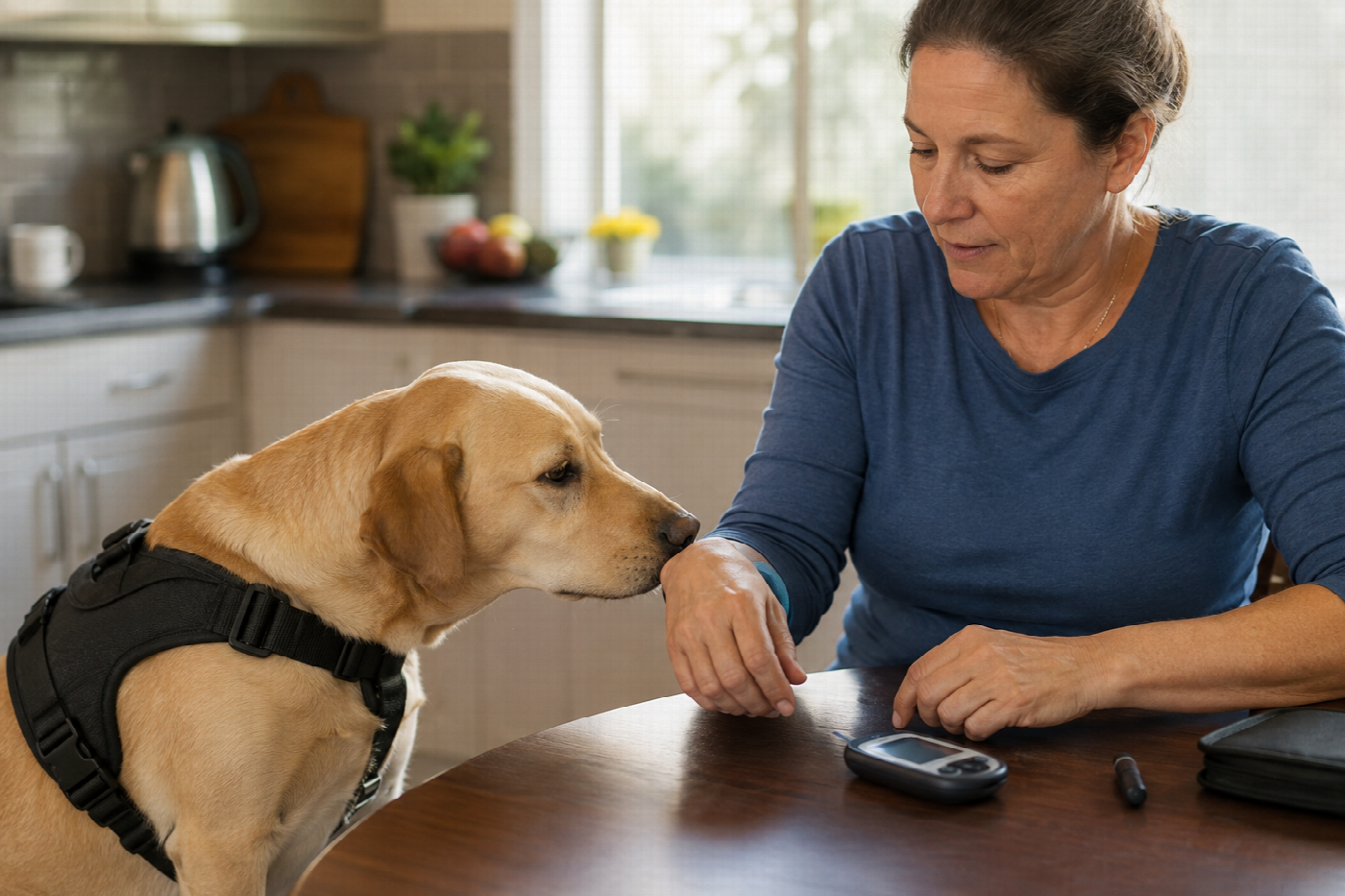
The dog should never be presented as a replacement for a blood glucose meter, continuous glucose monitor, insulin plan, glucagon, or medical care. Research shows that performance varies considerably among dogs.
Why hypoglycemia can be dangerous
Low blood glucose can occur in people who use insulin or certain other diabetes medications. Early symptoms can include shaking, sweating, hunger, dizziness, irritability, or confusion. Severe hypoglycemia can make a person unable to treat themselves and may lead to seizure or loss of consciousness.
Some people develop impaired awareness of hypoglycemia, meaning they do not recognize the usual warning symptoms until glucose is dangerously low.
The National Institute of Diabetes and Digestive and Kidney Diseases recommends individualized prevention and treatment planning. Continuous glucose monitors can sound an alarm when estimated glucose falls below a set range. Fast-acting carbohydrates and prescribed glucagon remain important parts of emergency preparation.
What a diabetic alert dog is trained to do
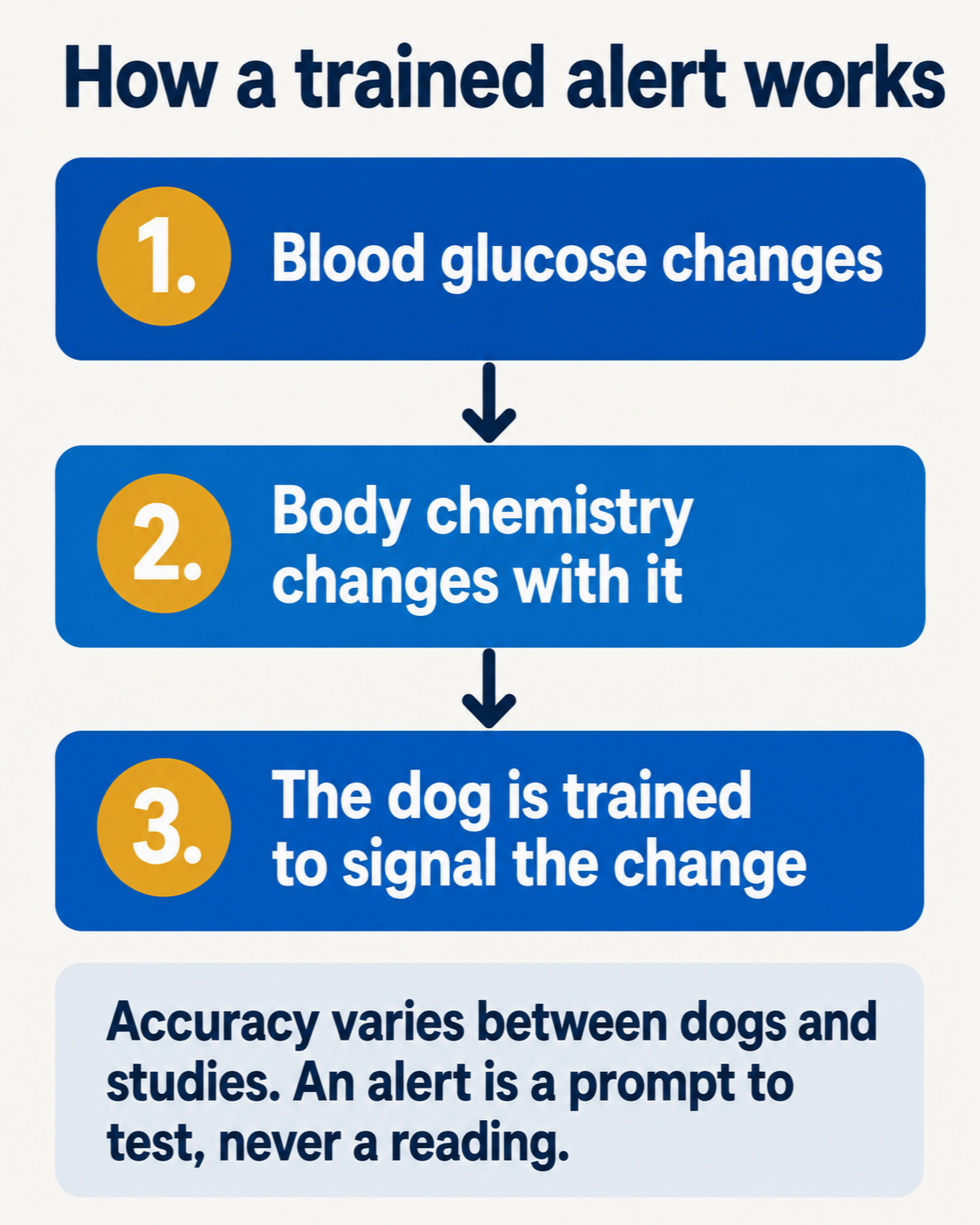
Training commonly uses scent samples associated with low or high glucose. The dog learns a clear alert behavior, such as a nose nudge, paw touch, retrieval of a designated object, or sustained stare. The alert must be easy for the handler to recognize and different from ordinary attention-seeking.
Additional tasks may include:
- Waking the handler or caregiver
- Retrieving a glucose meter or treatment kit
- Bringing a phone
- Getting another person in the home
- Activating an alert button
- Persisting until the handler checks glucose
The useful task is not merely smelling a change. It is performing a trained behavior that prompts action.
What the research says about accuracy
Studies confirm that dogs can learn to distinguish some odor samples associated with hypoglycemia under controlled conditions. Real-world reliability is more complicated.
Published studies have found:
- Wide variation among individual dogs
- False alerts
- Missed glucose events
- Delays compared with continuous glucose monitor alerts in some research
- High handler satisfaction even when objective accuracy is limited
- Better performance in some carefully trained and well-maintained teams
One 2017 study found that many dogs did not reliably distinguish hypoglycemia from normal glucose and that alerts were often less timely than continuous glucose monitor alarms. Other studies have reported stronger performance among selected trained dogs. The overall conclusion is not that diabetic alert dogs never work. It is that accuracy cannot be assumed from the label or the trainer's promise.
A dog and a CGM can serve different roles
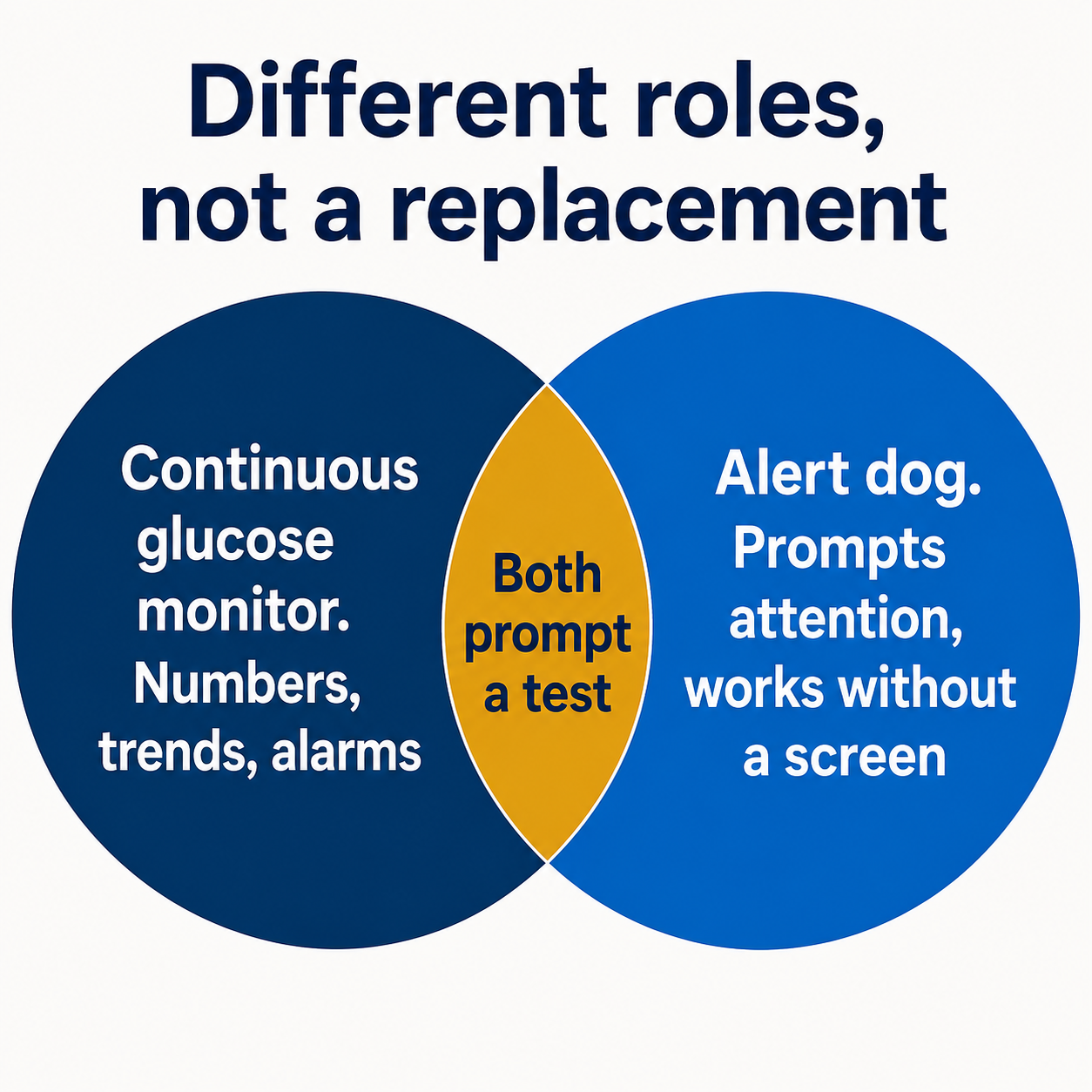
A continuous glucose monitor estimates glucose at regular intervals, shows trends, stores data, and can provide numeric alarms. A dog provides a behavioral alert and may wake someone, retrieve supplies, or get help.
For some people, the dog may notice a change before an alarm. In other situations, the CGM will alert first or the dog may miss the event. Using multiple safety layers is more responsible than treating either one as infallible.
When the dog alerts:
- Check glucose using the method recommended by the medical team.
- Follow the prescribed treatment plan.
- Reward the dog according to the training protocol when appropriate.
- Record the alert and measured glucose.
The dog should not be rewarded automatically without checking because doing so can reinforce false alerts.
How to evaluate a trainer's claims
Ask for objective data, not testimonials alone.
Important questions include:
- What glucose range is used for training?
- Are low, high, or both types of alerts trained?
- How are scent samples collected, stored, and handled?
- How are false alerts and missed events tracked?
- What sensitivity and positive predictive value does the program report?
- Is performance verified against meter or CGM data?
- What maintenance training is required?
- What happens if the dog does not develop reliable alerts?
- Which response tasks will remain useful even if scent alerting is inconsistent?
Be cautious about a trainer who promises near-perfect accuracy, tells a client to stop using medical technology, or refuses to share how performance is measured.
Nighttime work
Some dogs are trained to wake the handler or a caregiver. Sleeping presents special challenges because the dog may also sleep, the handler may not respond to a subtle alert, and glucose may change quickly.
The nighttime plan should include:
- A strong, tested wake-up behavior
- CGM alarms when medically appropriate
- Accessible fast-acting carbohydrate
- Prescribed glucagon
- A caregiver plan when needed
- A method for contacting emergency help
Public access and the ADA
A dog trained to alert to blood glucose changes and perform related tasks may qualify as a service dog when the handler has a disability and the work is directly related to that disability.
No federal service dog registry, certification, or therapist letter is required for public access. The dog must still be housebroken and under control.
Is a diabetic alert dog right for everyone?
Consider:
- The person's history of severe hypoglycemia or impaired awareness
- Current CGM and medical treatment options
- Ability to care for and train with the dog
- Cost and wait time
- Need for response tasks beyond alerting
- Home, school, or workplace environment
- Allergies and other household animals
- Availability of reliable follow-up support
A diabetes care team can help clarify the medical risks and safety plan. A qualified trainer can assess whether the desired tasks are realistic.
The bottom line
Diabetic alert dogs may offer meaningful assistance, especially through persistent alerts and trained response tasks. Their accuracy varies, so they should be treated as one part of a layered diabetes safety plan.
Sources
- NIDDK: Low Blood Glucose
- NIDDK: Continuous Glucose Monitoring
- PubMed: Reliability of Trained Dogs to Alert to Hypoglycemia
- PubMed: Diabetes Alert Dogs, Accuracy and Challenges
- NIH: Owner-Independent Investigation of Diabetes Alert Dog Performance
- U.S. Department of Justice: ADA Service Animal Requirements
This article is educational and is not medical advice. Never change diabetes medication, monitoring, or emergency treatment based only on a dog's behavior.