TASKS AND CONDITIONS
How Guide Dogs Help People Who Are Blind or Have Low Vision
Guide dogs are highly trained service dogs that help people who are blind or have low vision travel safely and independently. They do not take control of the trip. The handler and dog work as a team.
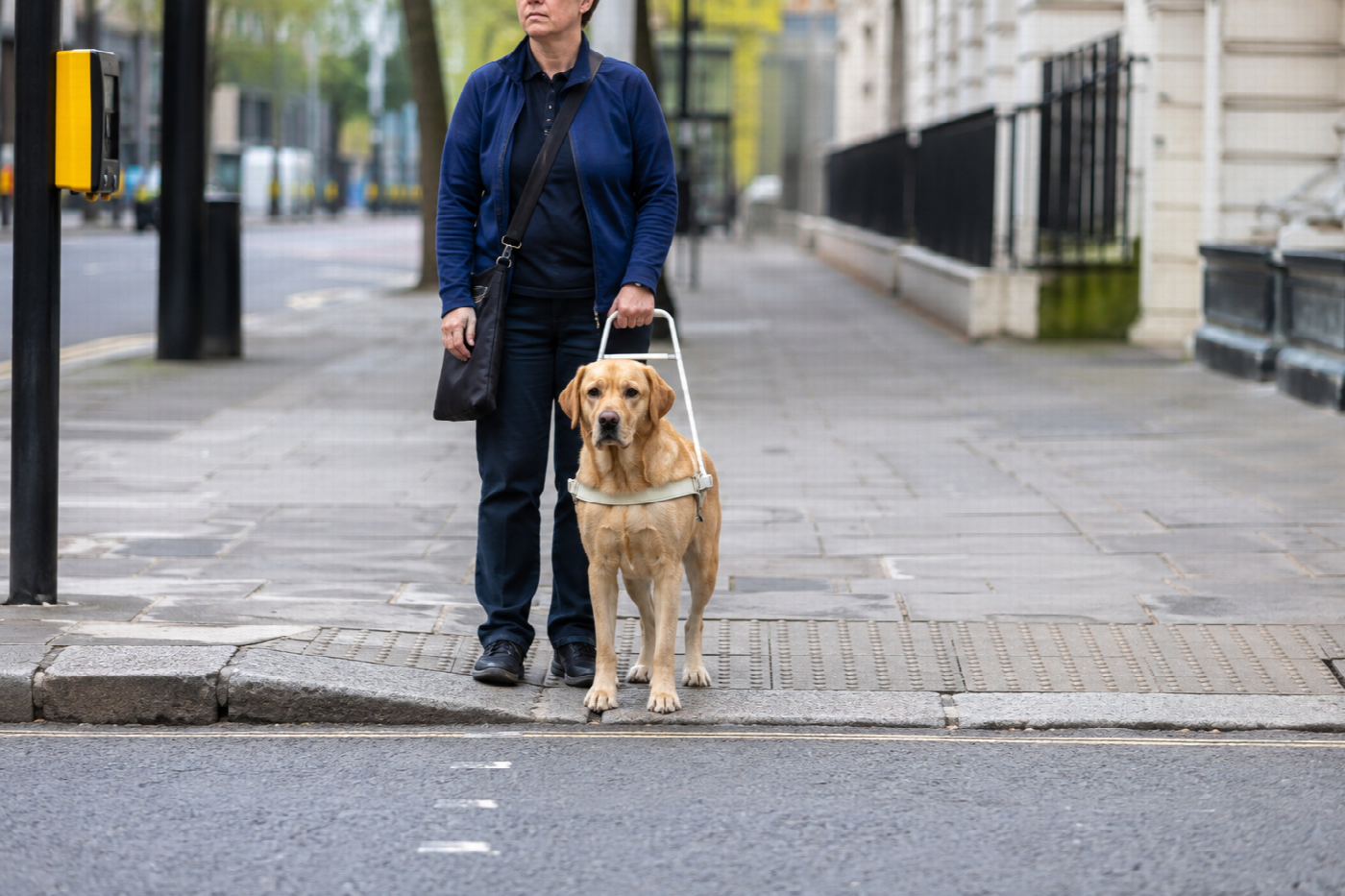
The handler knows the destination, gives directional cues, and decides when to cross a street. The dog helps carry out those decisions while avoiding hazards.
What guide dogs are trained to do
A guide dog may learn to:
- Travel in a straight line
- Navigate around people and obstacles
- Stop at curbs, stairs, and changes in elevation
- Avoid overhead obstacles
- Find doors, chairs, counters, elevators, and stairs
- Maintain a safe path through crowds
- Locate familiar landmarks
- Board and ride public transportation
- Ignore food, animals, and other distractions
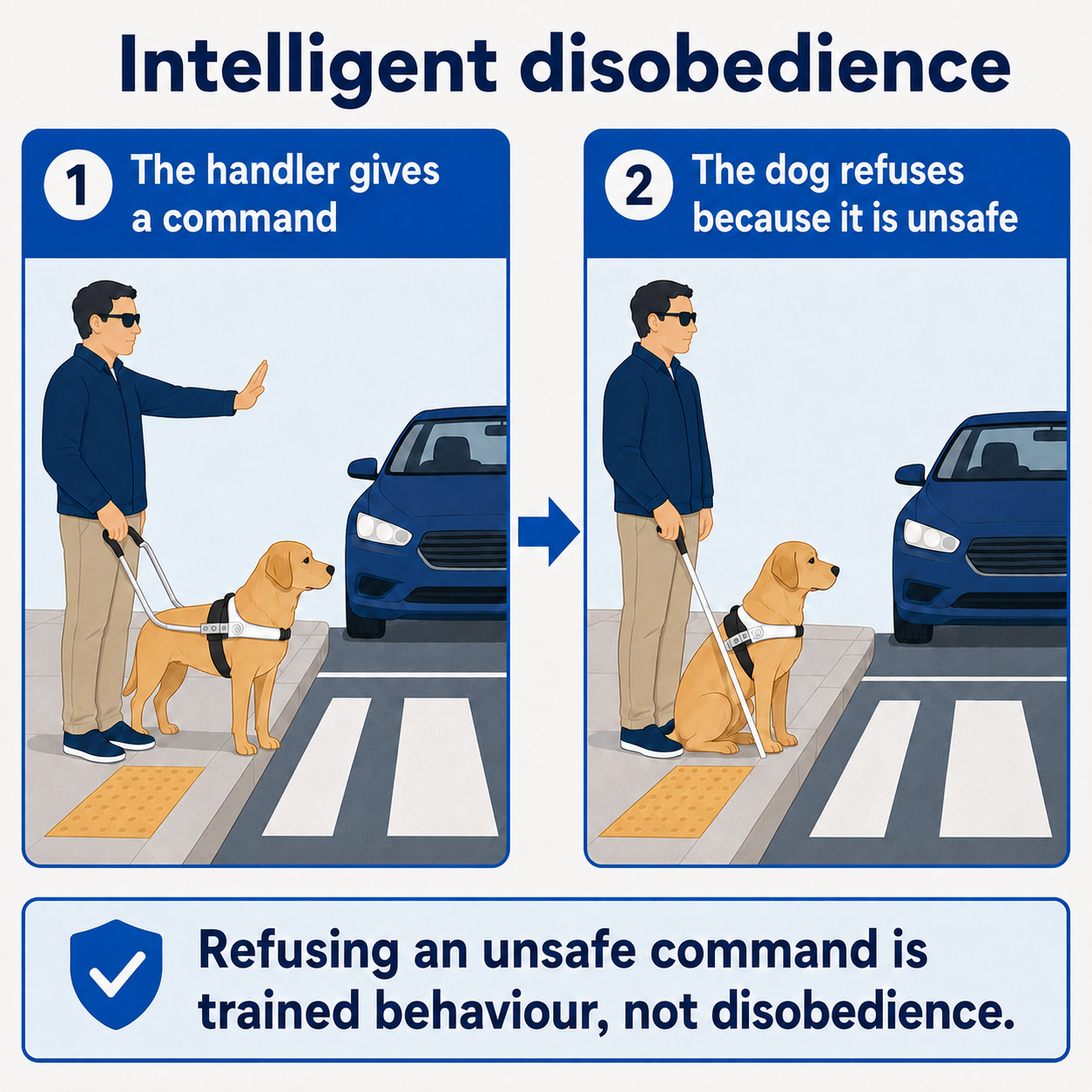
- Refuse a cue when moving forward would create immediate danger
The dog communicates information through changes in pace, direction, stopping, and body movement that the handler feels through the harness.
Intelligent disobedience
Intelligent disobedience means the dog refuses or modifies a cue that would put the team in danger.
For example, the handler may cue the dog forward without knowing that a quiet vehicle is crossing the path. A properly trained dog may stop, back up, or move away from the vehicle.
This does not mean the dog makes every travel decision. The skill is a safety response within a partnership. Training programs deliberately practice traffic situations so dogs learn to take responsibility when following a cue would be unsafe.
What a guide dog cannot do
A guide dog generally cannot:
- Read a traffic light
- Decide when every street is safe to cross
- Know the route to an unfamiliar destination without direction
- Read signs or building numbers
- Replace all orientation and mobility skills
- Protect the handler from every possible hazard
The handler uses traffic sounds, orientation skills, directions, accessible technology, and environmental information. The dog guides the physical line of travel.
Orientation and mobility still matter
Orientation means knowing where you are and where you want to go. Mobility means traveling safely through the environment.
Many guide dog programs expect an applicant to have foundational orientation and mobility skills. These may include understanding street patterns, judging traffic by sound, following directions, maintaining orientation, and using a white cane.
A guide dog can make travel faster or more fluid for some people, but it requires active decision making. The right mobility tool is a personal choice. Some people prefer a cane, some prefer a dog, and some use different tools in different situations.
Matching the dog and handler
Programs consider:
- Walking pace
- Strength and balance
- Typical travel environment
- Work and school routines
- Household animals
- Experience handling dogs
- Amount of travel
- Communication style
- The dog's temperament and working speed
The fastest or most confident dog is not automatically the best match. A compatible pace, communication pattern, and lifestyle are essential.
Training the team
After the dog completes guide work training, the handler must learn to work with that specific dog. Team training may cover:
- Harness communication
- Directional cues
- Street crossings
- Traffic responses
- Indoor navigation
- Public transportation
- Feeding, grooming, and veterinary care
- Dog behavior and reinforcement
- Problem solving
- Access rights and responsibilities
Skills continue to develop after the team returns home. Follow-up support from the program is important.
Public etiquette around a guide dog
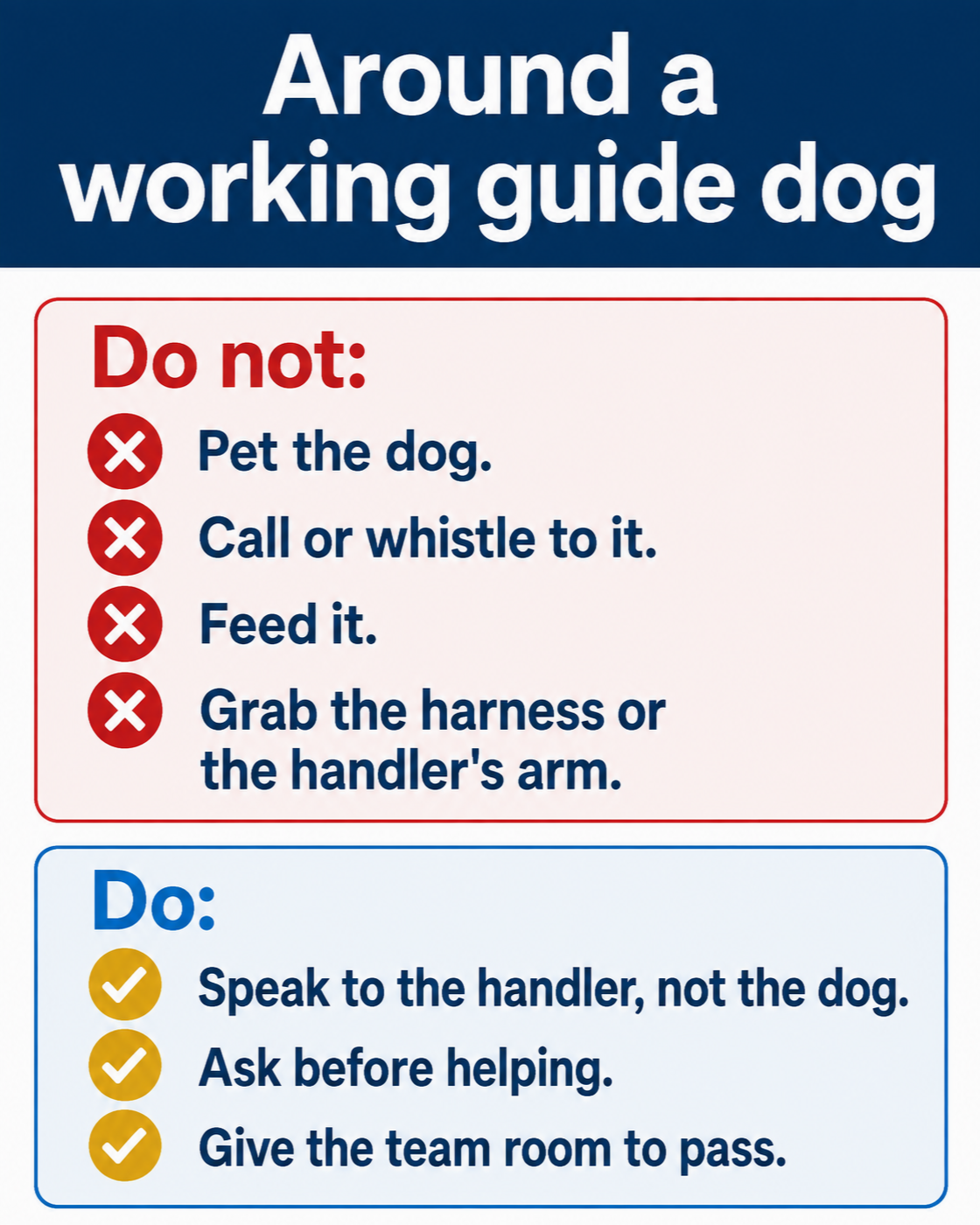
When a guide dog is working:
- Do not pet, call, whistle to, or feed the dog.
- Do not grab the harness or leash.
- Speak directly to the handler.
- Ask before offering help.
- Give the team space to navigate.
- Keep pets under control.
- Do not allow a child to approach without permission.
If giving directions, use specific terms such as left, right, number of blocks, and the location of doors or stairs. Pointing and saying over there is not useful.
Access rights
Guide dogs meet the ADA service animal definition when they are trained to guide a person with a disability. They generally may accompany the handler in public businesses, government programs, public transportation, and other covered settings.
Businesses cannot require a certification, ID card, or proof from a doctor. The dog must remain under control and can be removed for the same limited reasons that apply to other service dogs.
Dog welfare and retirement
Guide work is demanding. Programs and handlers should monitor health, stress, confidence, gait, vision, hearing, and willingness to work.
Retirement may become appropriate because of age, illness, reduced confidence, or a mismatch with the handler's changing lifestyle. Some retired dogs remain with the handler or family. Others live with a trusted adopter. Retirement planning should begin before a crisis.
Questions to ask a guide dog school
- Is the organization accredited by the International Guide Dog Federation or Assistance Dogs International?
- What orientation and mobility skills are required?
- How are teams matched?
- What expenses are covered?
- How long is team training?
- What follow-up is available in the handler's home area?
- Who retains legal ownership?
- What happens if the match is unsuccessful?
- How are veterinary care and retirement handled?
Sources
- International Guide Dog Federation Standards
- Guide Dogs for the Blind: Guide Dog Training
- APH ConnectCenter: Walking With a Dog Guide
- U.S. Department of Justice: ADA Service Animal Requirements
Guide dog programs differ in eligibility, cost, training format, service area, and follow-up. Verify current requirements directly with each program.