TASKS AND CONDITIONS
What Tasks and Duties Can Service Dogs Perform?
Service dogs do far more than guide people who are blind. They can retrieve objects, interrupt dangerous behavior, summon help, respond to seizures, alert to sounds, and perform many other trained actions.
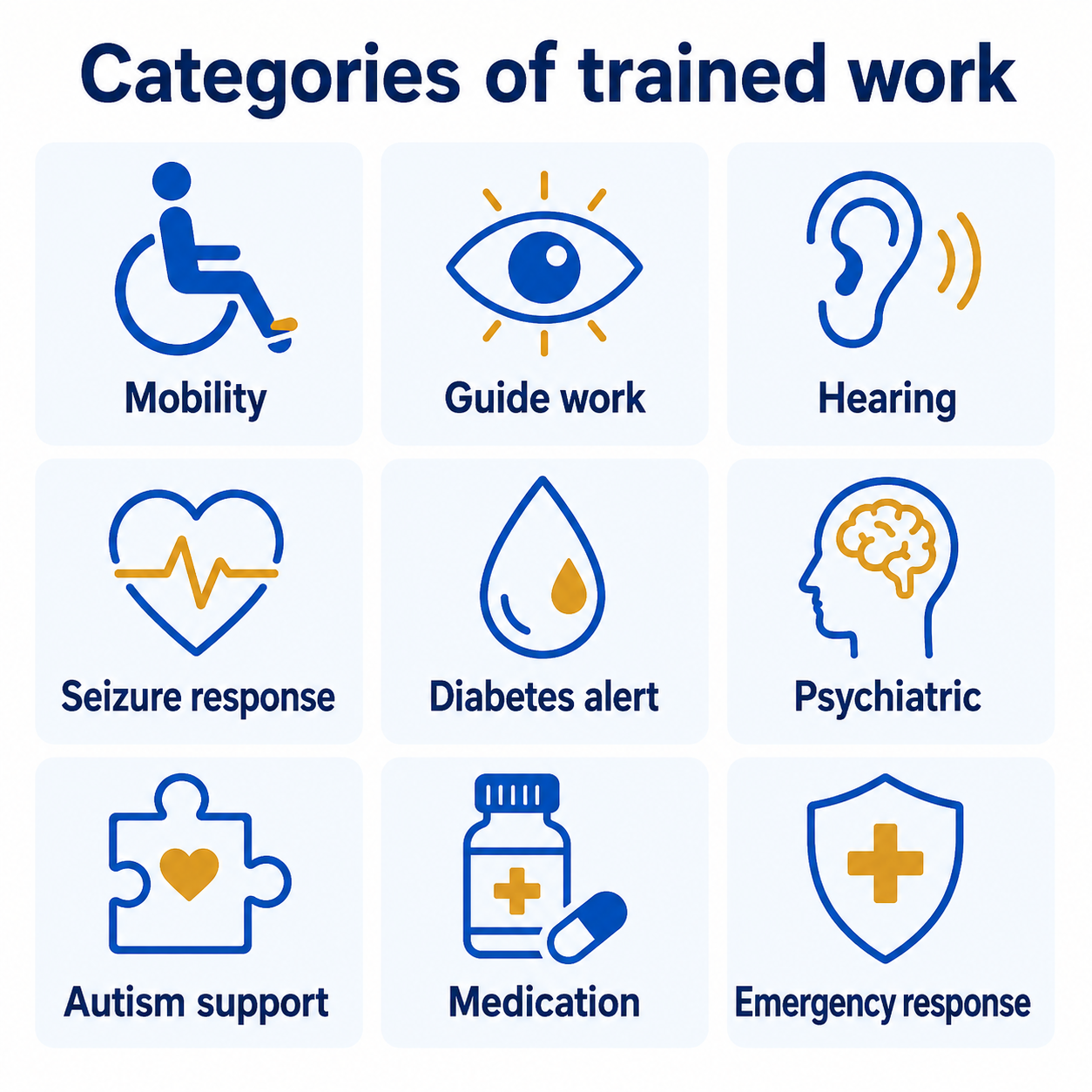
The legal test is not whether a task is impressive. The task must be individually trained and directly related to the handler's disability.
Mobility and physical assistance
A mobility service dog may:
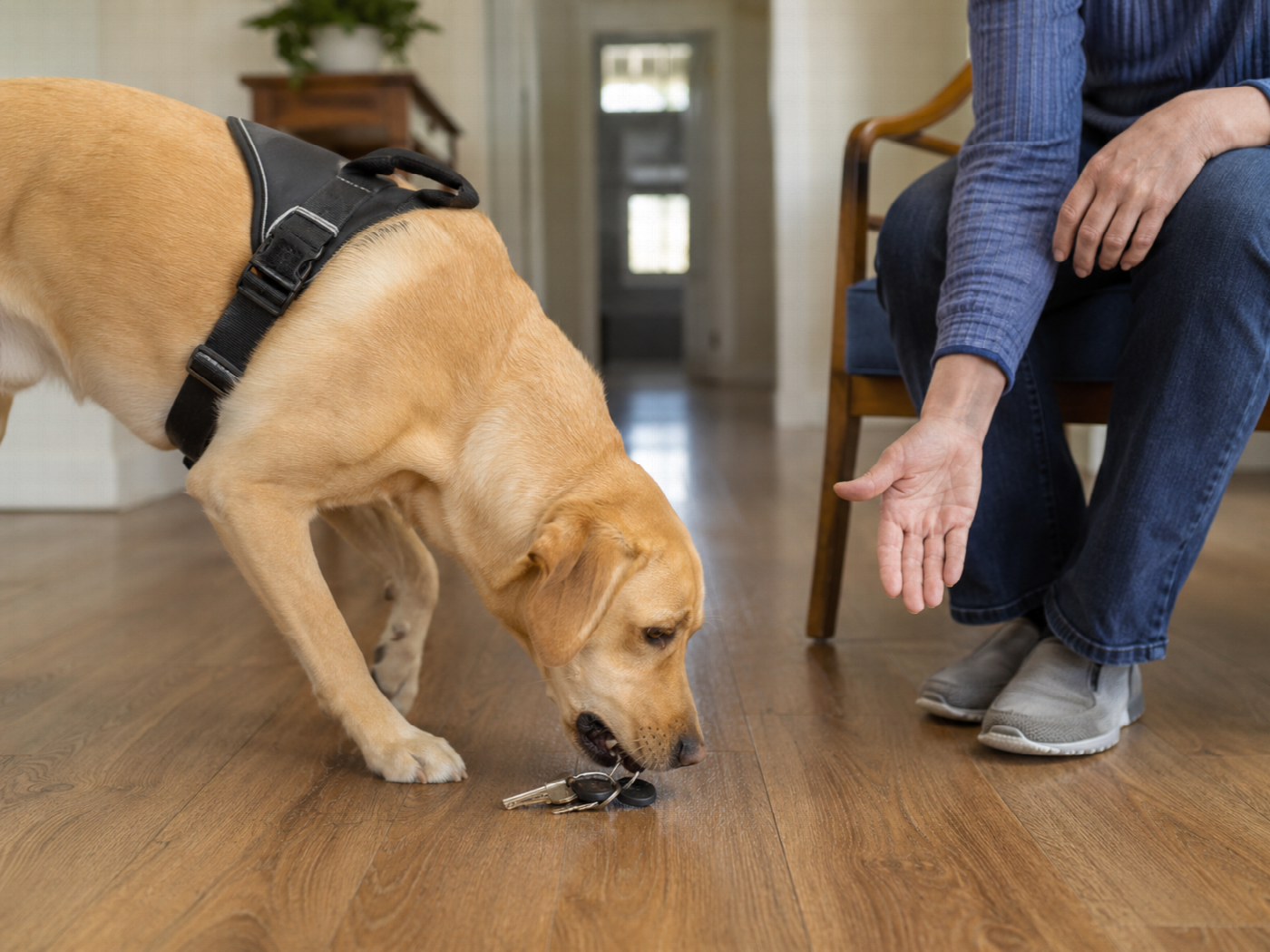
- Retrieve dropped items
- Carry lightweight objects
- Open or close an accessible door
- Pull a drawer using an attached strap
- Bring clothing or assistive equipment
- Press an automatic door button
- Turn a light switch on or off
- Pull a manual wheelchair when the task is safe for the dog
- Provide trained counterbalance or forward momentum when physically appropriate
- Help transfer items between the handler and another person
Mobility work must be designed around the dog's size, structure, health, and welfare. Weight-bearing tasks can injure a dog when poorly designed. A veterinarian and experienced mobility trainer should evaluate the proposed work.
Guide work for blindness or low vision
Guide dogs may:
- Lead the handler around obstacles
- Stop at curbs, stairs, and changes in elevation
- Avoid overhead hazards
- Find doors, chairs, counters, elevators, or familiar landmarks
- Maintain a safe travel line through crowds
- Refuse a cue that would move the team into immediate danger
The handler chooses the route and decides when to cross a street. The dog does not read a traffic signal or independently choose a new destination.
Hearing-related tasks
A hearing dog may alert a person to:
- A smoke or carbon monoxide alarm
- A doorbell or knock
- A ringing phone
- A timer
- A baby crying
- A person's name being called
- An emergency siren
The dog may make physical contact and lead the handler toward the sound or away from danger, depending on the cue and training.
Seizure response
A seizure response dog may:
- Activate an emergency call device
- Bark or retrieve another person
- Stay near the handler during or after a seizure
- Retrieve a phone or medication kit
- Guide a disoriented handler to a safe location
- Provide a trained behavior during postictal recovery
Some dogs appear to alert before seizures, but prediction is not reliable enough to guarantee. Response tasks are more directly trainable.
Diabetes-related tasks
A diabetic alert dog may be trained to respond to odor changes associated with glucose moving outside a target range. It may:
- Nudge, paw, or use another trained alert
- Wake the handler or caregiver
- Retrieve a glucose meter, treatment kit, or phone
- Get another person
- Activate an alarm device
Alert accuracy varies. A dog should supplement, not replace, a glucose meter, continuous glucose monitor, medication plan, glucagon access, or medical care.
Psychiatric service dog tasks
A psychiatric service dog may:
- Interrupt self-harm or repetitive injurious behavior
- Interrupt dissociation with a trained touch
- Wake a person from a trauma-related nightmare
- Retrieve medication
- Lead the handler to an exit during a disabling episode
- Create trained space in a crowd without threatening others
- Find a designated support person
- Provide deep pressure as a trained response to specific symptoms
- Interrupt freezing or panic behavior
Merely making a person feel safer is emotional support. Taking a trained action in response to disability symptoms is service work.
Autism-related tasks
Depending on the person's disability and needs, a dog may:
- Interrupt self-injurious behavior
- Alert a caregiver to unsafe movement
- Retrieve communication equipment
- Provide a trained grounding response
- Assist with transitions through a trained routine
- Find a caregiver
Tethering a child to a dog raises safety and welfare concerns and should not be attempted without highly specialized professional guidance.
Medication and daily living tasks
A dog may be trained to:
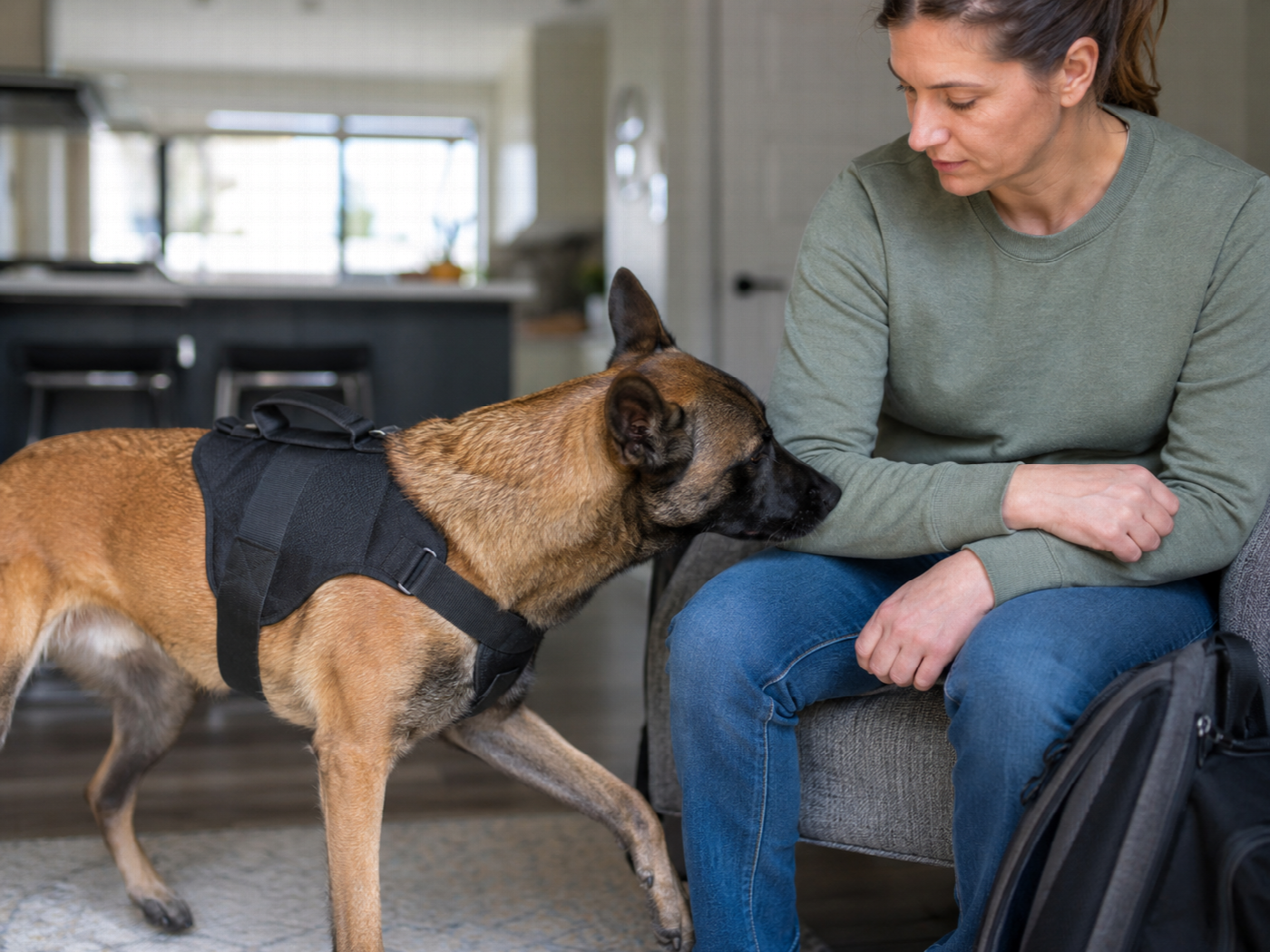
- Retrieve a medication bag
- Respond to an alarm by bringing supplies
- Carry a message between household members
- Bring a phone
- Pick up dropped items
- Place laundry into a basket
- Remove socks or a lightweight garment
A dog should not be trained to make medical decisions, administer a medication in a dangerous manner, or perform a task that puts the dog or handler at unreasonable risk.
Emergency tasks
Depending on the situation, a service dog may:
- Activate a wearable or wall-mounted alert
- Retrieve another person in the home
- Bring a phone
- Lead emergency personnel to the handler when carefully trained
- Stay in a designated position
Training a dog to leave a handler unattended, cross streets alone, or approach strangers can create risk. Emergency tasks need thoughtful planning and backup systems.
Tasks that may not qualify
These benefits usually do not constitute ADA work by themselves:
- Companionship
- Emotional comfort from the dog's presence
- Crime deterrence based on appearance
- General motivation to exercise
- Ordinary pet affection
The dog can provide these benefits, but at least one individually trained disability-related task is needed for ADA service animal status.
Public behavior is part of the job
Even a dog with excellent task skills may be removed from a public place if it is out of control or not housebroken. A working dog should be able to ignore food, strangers, and other animals, settle quietly, navigate crowds, and recover from normal environmental surprises.
Public manners are not a substitute for a disability-related task. Both task training and appropriate behavior matter.
Match the task to the person
The best task list starts with function, not diagnosis. Two people with the same diagnosis may need completely different help. A qualified trainer should ask:
- What activity is limited?
- What happens before, during, and after the problem?
- Which trained action would reduce the limitation?
- Can a dog perform that action safely and reliably?
- Would technology or another accommodation work better?
- Can the handler care for and control the dog?
Sources
- U.S. Department of Justice: ADA Requirements for Service Animals
- U.S. Department of Justice: Service Animal FAQs
- IAADP: Tasks Performed by Guide, Hearing, and Service Dogs
- IAADP: Psychiatric Service Dog Tasks
Task lists should be individualized with attention to medical needs, training feasibility, and the dog's physical and emotional welfare.