TASKS AND CONDITIONS
How Service Dogs Can Help With Nightmares and Night Terrors
Psychiatric service dogs are sometimes trained to wake a person from a trauma-related nightmare, turn on a light, retrieve medication, or get another person. These tasks may improve safety and help the person reorient after waking.
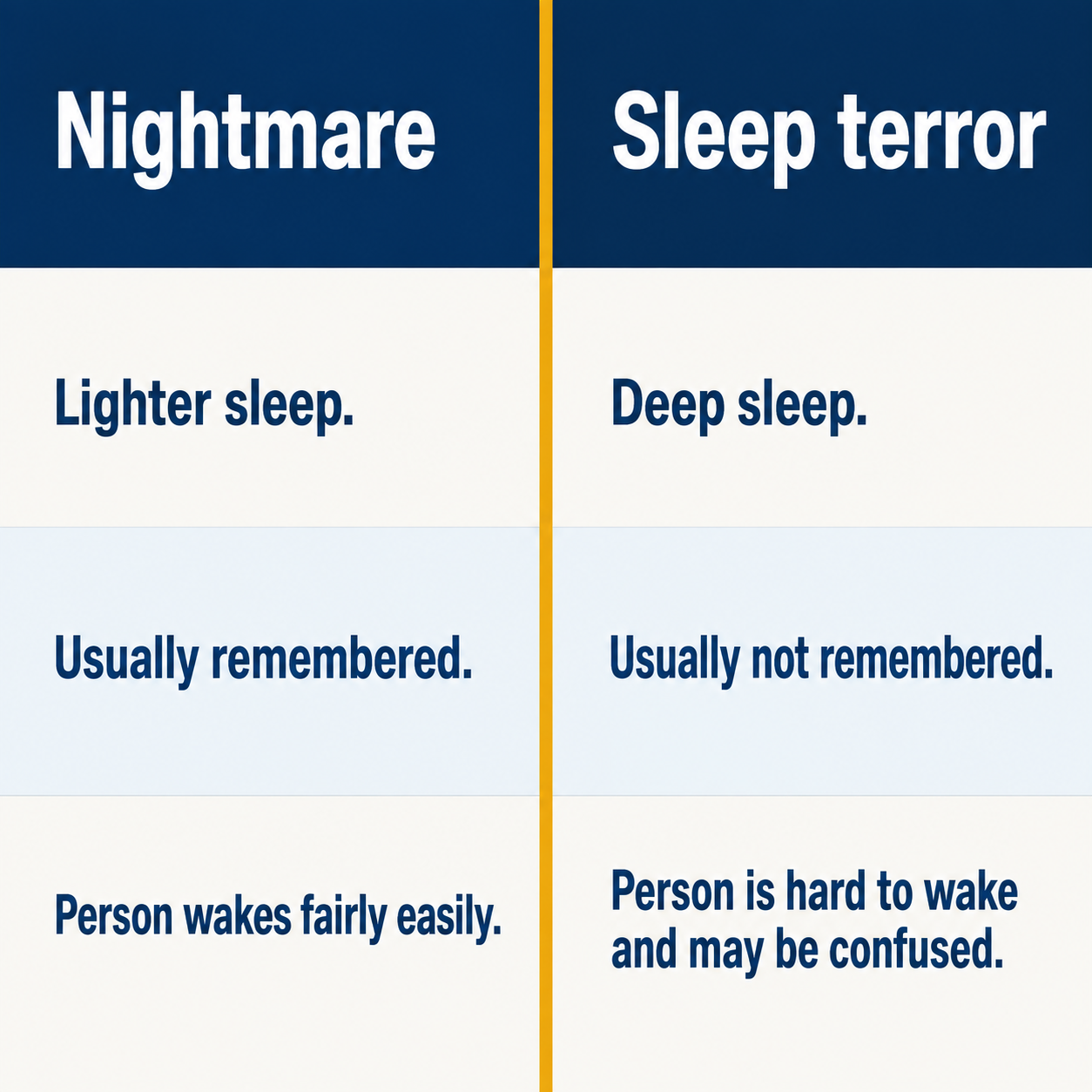
The phrase night terrors is often used casually to describe any frightening sleep episode. Clinically, nightmares and sleep terrors are different. A person considering a service dog should first obtain an accurate evaluation because the best response depends on what is happening during sleep.
Nightmares and sleep terrors are not the same
Nightmares are vivid, disturbing dreams that usually occur during rapid eye movement sleep. The person commonly wakes and remembers the dream.
Sleep terrors, also called night terrors, are non-REM parasomnias. A person may scream, sit up, move suddenly, appear intensely frightened, show rapid heart rate and breathing, or be difficult to awaken. Confusion and little memory of the event are common.
Other conditions can look similar, including sleep-related epilepsy, REM sleep behavior disorder, sleep apnea, medication effects, substance withdrawal, and other parasomnias. New, violent, frequent, or dangerous episodes require professional evaluation.
Tasks a service dog may perform
Depending on the person's disability and observable behavior, a dog may be trained to:
- Wake the handler after detecting specific movement or vocalization
- Turn on a light
- Provide a trained tactile grounding cue
- Retrieve a phone or medication bag
- Get a designated household member
- Lead the person to a predetermined safe location after waking
- Interrupt panic or dissociation after the episode
- Remain nearby during reorientation
The task should be defined precisely. Wake me from nightmares is not a complete training plan. The trainer needs an observable cue, a safe response, a clear success criterion, and a plan for false or missed responses.
Trauma nightmares and PTSD
Nightmares are a recognized symptom of PTSD. Studies of psychiatric service dogs often describe trained nightmare interruption as one task among several, along with interrupting anxiety, retrieving medication, creating space, and grounding.
Research suggests that some veterans with service dogs report better sleep or less fear of sleep. However, the evidence base remains limited. The VA's National Center for PTSD states that evidence-based PTSD treatment remains important and that service dogs should not be assumed to treat the underlying disorder.
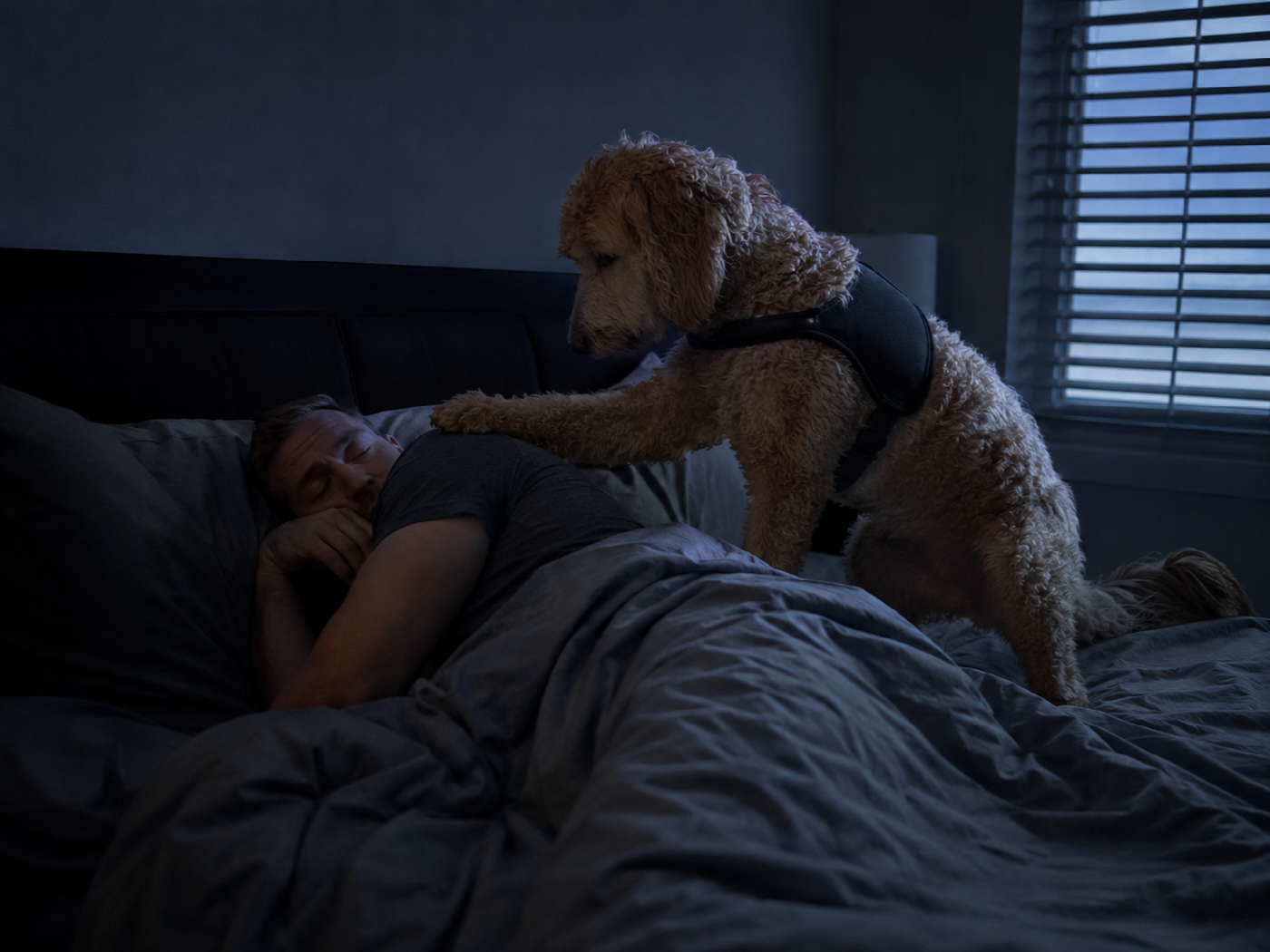
A dog may help with function while the person continues psychotherapy, medication management, or sleep treatment.
Safety during a sleep terror
Abruptly waking or physically crowding a person during a sleep terror may increase confusion or create risk for the person and dog. A dog should not be placed in the path of kicking, striking, or sudden movement.
When true sleep terrors are suspected, the response plan should be developed with a sleep professional and an experienced trainer. In some cases, a safer task may be waking another person or activating an alert rather than touching the sleeper.
The bedroom environment may also need changes such as securing doors or windows, removing sharp hazards, addressing stairs, and evaluating sleep deprivation or other triggers.
What a dog cannot be expected to do
A service dog cannot:
- Diagnose the cause of a sleep episode
- Guarantee that every episode will be detected
- Replace a sleep study or medical evaluation
- Treat sleep apnea or epilepsy
- Replace evidence-based PTSD treatment
- Safely restrain a person during violent movement
- Make emergency medical decisions
These limits should be stated clearly by any program.
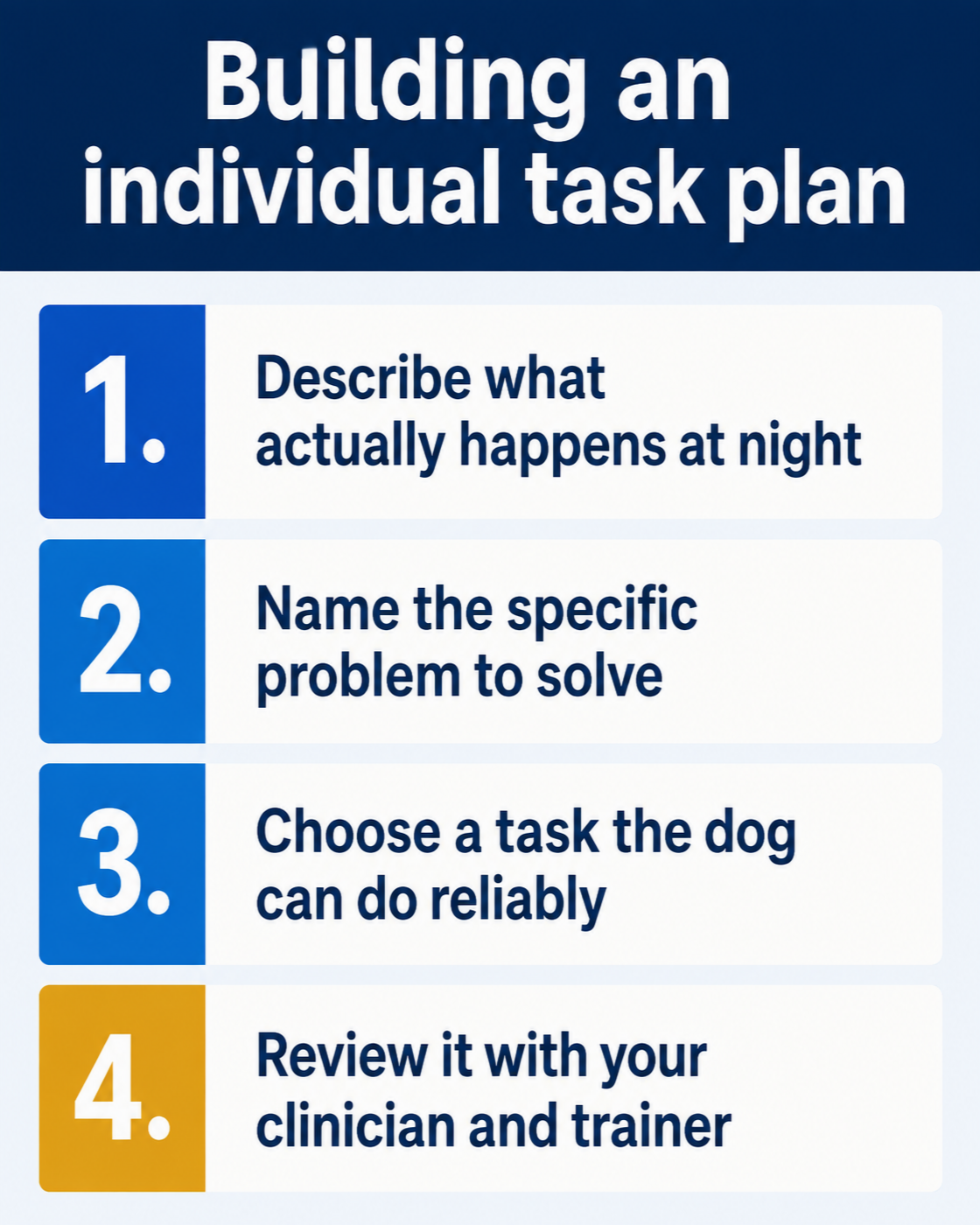
Building an individualized task plan
Useful questions include:
- What exactly happens during the episode?
- Is there a consistent sound, movement, or physiological cue that a dog can observe?
- Is waking the person safe and clinically appropriate?
- What should the dog do if the first cue does not work?
- Should the dog retrieve another person instead?
- How will false responses be prevented and recorded?
- How will the dog be protected from sudden movement?
- What medical and human backup systems are needed?
Video recorded for a clinician, when safe and consented to, may help describe an episode. Privacy and dignity should be protected.
Who might benefit?
A service dog may be considered when:
- The sleep problem is associated with a qualifying disability.
- There is a specific, safe, trainable response.
- The task improves function or safety.
- The person can care for and control the dog.
- The dog can work without unacceptable risk or chronic sleep disruption.
- The person continues appropriate clinical care.
The dog's welfare matters. Repeatedly waking the dog, exposing it to unpredictable violent movement, or expecting constant vigilance can create stress. The dog needs adequate rest and a task design that respects normal sleep.
ADA qualification
A dog trained to wake a handler from disability-related nightmares or perform another specific response may qualify as a psychiatric service dog. The person must have a disability, and the trained work must be directly related to that disability.
A dog that simply sleeps nearby and provides comfort is providing emotional support. That benefit may be meaningful, but it is not an ADA task.
When to seek urgent help
Seek medical guidance promptly when sleep behavior is new, worsening, violent, associated with injury, accompanied by breathing pauses, possibly seizure-related, or linked to medication or substance changes.
If nightmares are connected with suicidal thoughts or an immediate mental health crisis, contact emergency services or the 988 Suicide and Crisis Lifeline in the United States.
The bottom line
Service dogs can perform useful nighttime response tasks, particularly for trauma-related nightmares. True night terrors require a more cautious plan because confusion and sudden movement can create risk. The first step is accurate clinical assessment, followed by individualized and humane task design.
Sources
- VA National Center for PTSD: Dogs and PTSD
- VA PTSD Research Quarterly: Service Dog Tasks and Evidence
- NIH: Defining the PTSD Service Dog Intervention
- American Academy of Sleep Medicine: Sleep Terrors
- NIH: Sleep Terrors Review
- MedlinePlus: Sleep Disorders
This article is educational and is not medical advice. Sleep episodes should be evaluated by a qualified medical or mental health professional.